Wednesday, April 29, 2015

Porting for Power! Cylinder Head Porting

We lightly covered this in class. Cylinder heads are where the power is made. We need to get as much air into the cylinder as possible. Here are a few articles I browsed through that show the information in detail with plenty of photos. Please keep in mind that these a mostly forums where people use foul language, so just ignore it!

------------------------------------------------------------------------------------------------------

The components responsible for manipulating airflow are:
Manifolds (plenum size and transition smoothness)


Gaskets and how they match up to the ports


Runners (texture and shape)


Ports (long turn and short turn radius) texture and shape.


Valve's:
      - Valve guide length
      - Valve stem diameter
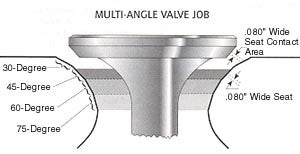
      - Valve seats
      - Valve face
      - Valve sealing area


Combustion Chamber shape and texture


Piston top shape and Clearance with valves


Equipment used for modifying a cylinder head:

Air-flow test bench (uses actual forced air and calibrated devices to measure air flow pressure).
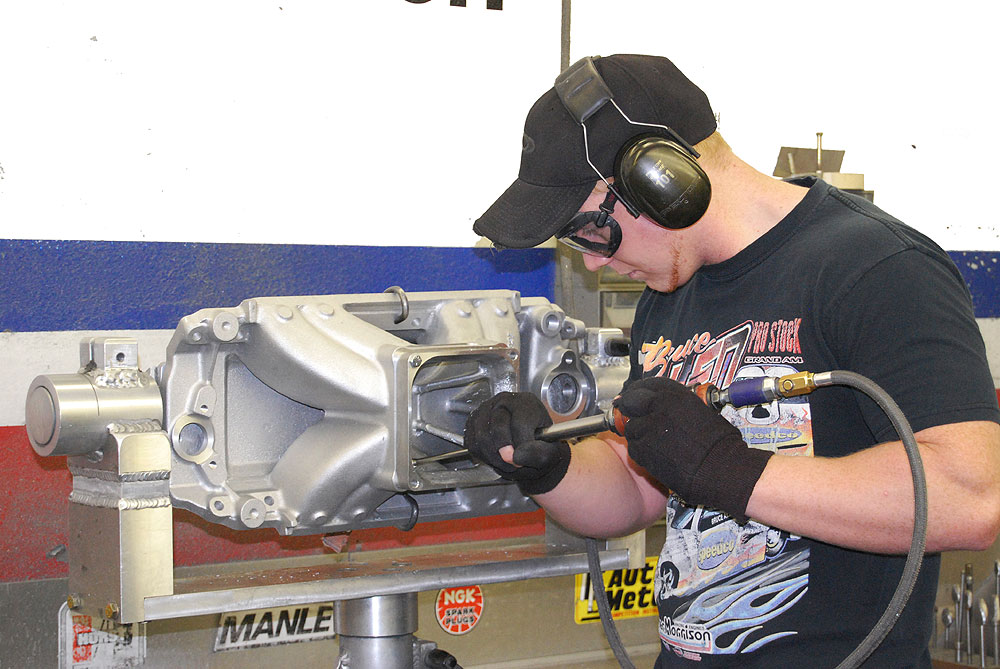
Porting tool and sanding bits
Milling machine
Valve cutting/grinding machine
Valve seat cutter/grinder
Welder or epoxy to add material
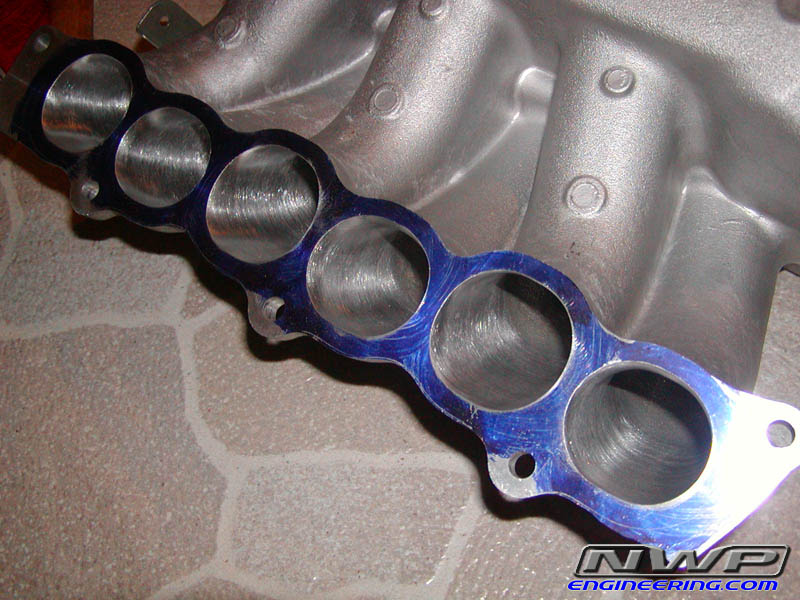
Machinist blue dye to lay out your work
Plenty of measuring devices

------------------------------------------------------------------------------------------------------

Check out a NJ cylinder head porter called "Head Games". They seem to work on everything! Click the link and browse their website. They have many different makes and models of cars in their menu which show the work they have done.

Link to Head Games website

------------------------------------------------------------------------------------------------------

Harley forum posting explaining a Valve Job and it's complexities.
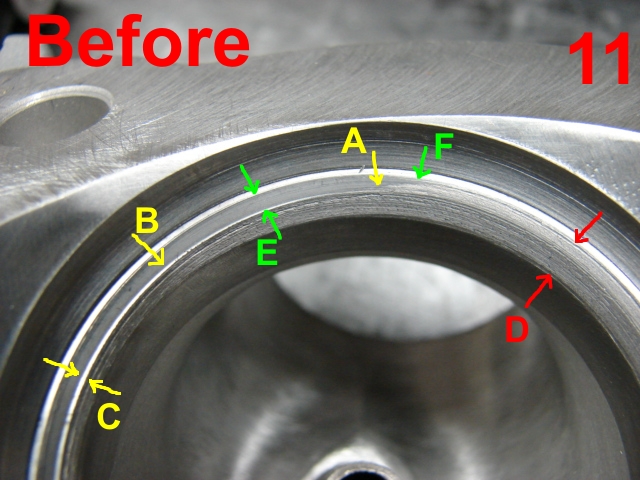


Link to Harley forum on Valve Jobs

------------------------------------------------------------------------------------------------------

Crankshaft Coalition's WIKI page on introduction to cylinder head porting.

Link to Crankshaft Coalition

------------------------------------------------------------------------------------------------------

In this website, Chevy Thunder, the author describes all of the components that must also be modified and how, when performing cylinder head porting. I really enjoy his graphics and his attention to the numbers.


Link to Chevy Thunder

------------------------------------------------------------------------------------------------------

Here is a forum thread from the H.A.M.B/Jalopy Journal on basic cylinder head porting. If you browse through this forum there will be many people building really cool hot rods and documenting them extensively.

Link to HAMB and Jalopy Journal Basic Head porting.

------------------------------------------------------------------------------------------------------

This article was produced by a company called Standard Abrasives explaining how their products are used for cylinder head porting. They went ahead and explained the basic porting process in great detail! It is a very informative document.

Link to Standard Abrasives porting document.

------------------------------------------------------------------------------------------------------

The website article here describes the use of thread to view air flow and turbulence. The thread can also find "dead spots" where the air isn't even present during its flow path towards the cylinder. You can see the tumble and the swirl produced by the port. This air is directed purposely towards areas in the combustion chamber such as squish pads and the spark plug (forces the air fuel mixture to go right to the source of pressure and ignition).


Link to DIY Porting Using Thread to check flow


There is also a bunch of information on engine performance and set up in this website DIYPorting. Check this link to the Piston to Valve Clearance. It is important to get a tight PtoVC, but not enough clearance and you will run the valve into the piston when it expands!


Link to DIY Porting PVC

------------------------------------------------------------------------------------------------------

This MotorGeek forum thread shows extensive modifications performed on a 5-cylinder 20-valve Audi engine. There are also pictures of it on the flow bench.


Link to MotorGeek forum thread

------------------------------------------------------------------------------------------------------

Here is an Audi inline-5 20-valve that has set a world land speed record. In the following links you will see the amount of work that goes into building a high-HP high-speed engine. There are MANY Pictures and detailed explanations.
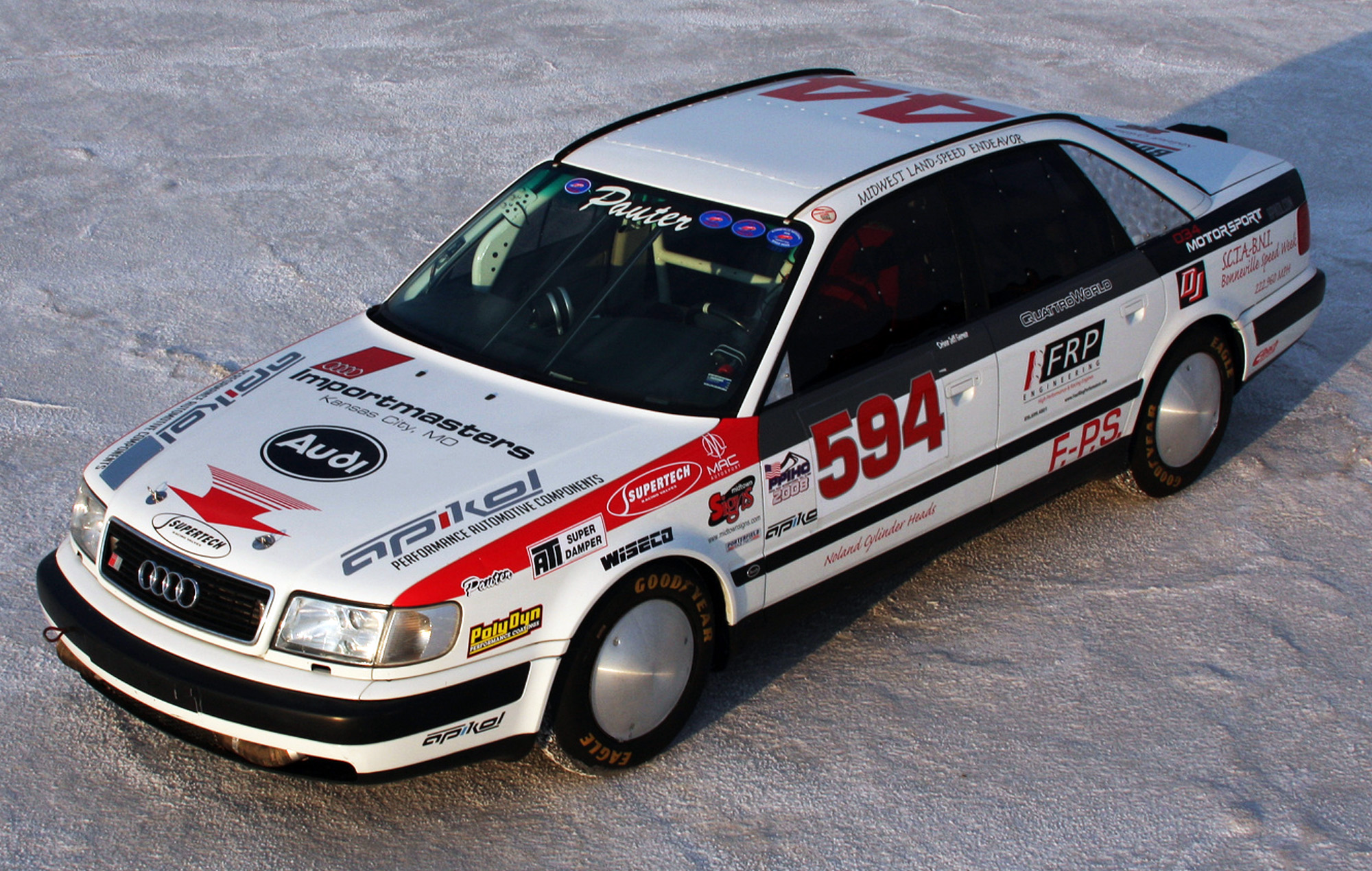


Project Pad link to FRP (Four Rings Performance) LSR Audi.

Link to Quattro World article on the car and a VIDEO!

------------------------------------------------------------------------------------------------------

Here is an article from Engine Builder Magazine discussing at length the importance of high performance piston rings and cylinder finishes and how they work together.

Link to Engine Builder Mag article on pistons and cylinder finishes.

------------------------------------------------------------------------------------------------------

Last but not least.... A link from Speed Academy that explains how rotary engine porting works. This defies much of what you already understand from piston engine porting.


Monday, August 4, 2014

some torque specs to consider

If you take a look at the notes at the bottom. Some specify a 1/4 turn. This means that bolt is taken to the point where it will be stretched and expected to clamp as hard as it possibly can. These bolts are usually never re-used (replaced) when the time comes to loosen it. Don't risk stretching a bolt twice, because it will snap. Prepare in advance :)


Thursday, June 12, 2014

What a blast!!

#pathofdestruction
#monsterjamnynj
#monsterjam

The Kids like go karts and monster trucks... I can see why!!

Wednesday, June 4, 2014

Buy a Shirt! We are selling some T-shirts to raise some money for our 1969 VW Restoration Project!


This year for the first time in the programs history students developed an Auto Tech t-shirt to wear proudly and raise funds to support our 1969 VW beetle restoration project. This one-of-a-kind-limited-run t-shirt was designed by two students using their personal creations. It is going to be a black t-shirt so you can wear it anywhere and not be worried about people spotting the grease stains from working on your car!


Below is the PayPal button if you want to buy a shirt to support our class. They are $15.00 and if we need to ship them, it will be another $5.00. You don't need a paypal account to buy a shirt, just a form of payment.

*Shirts orders will be processed Tuesday, June 10th giving us some time to sell as many as we can. The screen printer should have them ready in a week by June 17th. Please be patient this is our first time selling shirts. 

How to buy:
1. Select your size 
2. Click the Buy Now button
3. Follow the Paypal link and enter your info.

Sizes


THANK YOU FOR YOUR SUPPORT!!

Friday, May 30, 2014

Get familiar with ASE and how it works.

Mandatory Reads!!!

Click each link and check out what each has to show you. Come to class Monday prepared with questions. This is for our program completer's exam. I intend on testing you sometime next week, but first need to find an available proctor. We will be taking the ASE G1 Maintenance and Light Repair test.

Here is a free study guide with sample questions and answers. Challenge yourselves and don't skip ahead to the answers. Lets see how much you really know and if you can think like a machine!
Free ASE Study Guides

This is the official ASE study guide for ASE G1 Maintenance and Light Repair test. In this link you will find list of things you are expected to know and understand. There is plenty and you should know plenty of it. 7 Content Areas and 55 questions. Challenge yourselves!!
Offical ASE G1 Study Guide

ASE also put together a nice list of test taking tips. Browse through this as well. Might have some tips for you to consider on all types of tests.
ASE's Test Taking Tips!

Since this is a CBT (Computer Based Test) you will need to be familiar with the format before we actually take the test so you aren't wasting precious time figuring out the format. Take the sample test and click all of the buttons to try them out. GO ON!! TEST IT OUT!!
(Note: Make sure your pop-up's arent blocked as the test window is a POP-UP)
CBT Test Drive


Recommended Reads!

These are all of the other ASE Test Series available. There are tests to prove that you have what it takes in all areas of automotive service and repair. You might like buses, trucks, or just doing the machine work and finish work. There is a test for you to take and earn your certificate that will prove you are qualified!
ASE Certification Tests Series

This is a link to all of the other study guides available. If  you would like to see how much you know or would like to know, go ahead and browse through them. This is a recommended read if you are interested in becoming an automotive technician and taking the ASE exams!
Test Prep Training Study Guides


Wednesday, April 9, 2014

A day in the life of a newbie.

Today we (Kelvin, Mike, and me) prepped an area in the wheel well for welding. It's the place where the brake line from the reservoir connects with the brake line to the caliper. Basically it was a hole in the engine bay that was cracked from wear and possibly hard braking. Fixing it was simple, we cleaned the area with a wire-wheel and MIG( metal inert gas) -welded the crack in.

Wednesday, April 2, 2014

In case you weren't sure!

This is where you are supposed to go for 1st and 2nd period tomorrow! 3rd period head to Dr. Nina's room.

Friday, March 28, 2014

Thursday, March 13, 2014

This is our Google+ Community. If you are in the class and havent gotten in...

Click this link and request to join. From there you can make as many class-related posts you want. Here you can share pictures and ideas that will help us in our projects. Don't forget that you can include anything you think we'd like to see!!


Digital Profiles: YOU MUST HAVE ONE!!!

These days everyone and everything and their mothers are being "Googled".. What happens when nothing comes up?? Does this mean you don't exist? Certaintly NOT! The issue is that you may have great achievements and accomplishments, but the world knows nothing of them.

SO HOW DO YOU PROVE THAT YOU HAVE DONE WHAT YOU SAY YOU'VE DONE??? 

A portfolio, awards, credentials, final products... How many of those can you carry around with you to show when needed? What if you applied for a job, and before they considered your application, they "googled" you and when the results came in there was nothing about you.. NEXTTTT!! PICTURES OR IT DIDN'T HAPPEN..


Check out this MHS student's blog. He's posting his explorations and findings. He's already developed a great digital profile.

http://xavierz-enginework.blogspot.com/


This is Mr. Grosinger's Class' blog. He posts things here that him and his students do in class. He teaches a few classes in WNY's Memorial HS.


This is where the rubber meets the road! Google+ will allow us to easily keep each other up to speed on any of our progress and share photos of our work. Below you will find Mr. Grosinger's MHS Shop Class's Google+ Community. Here students are welcomed to share anything class related that they add to their blogs.


Friday, March 7, 2014

more recent findings

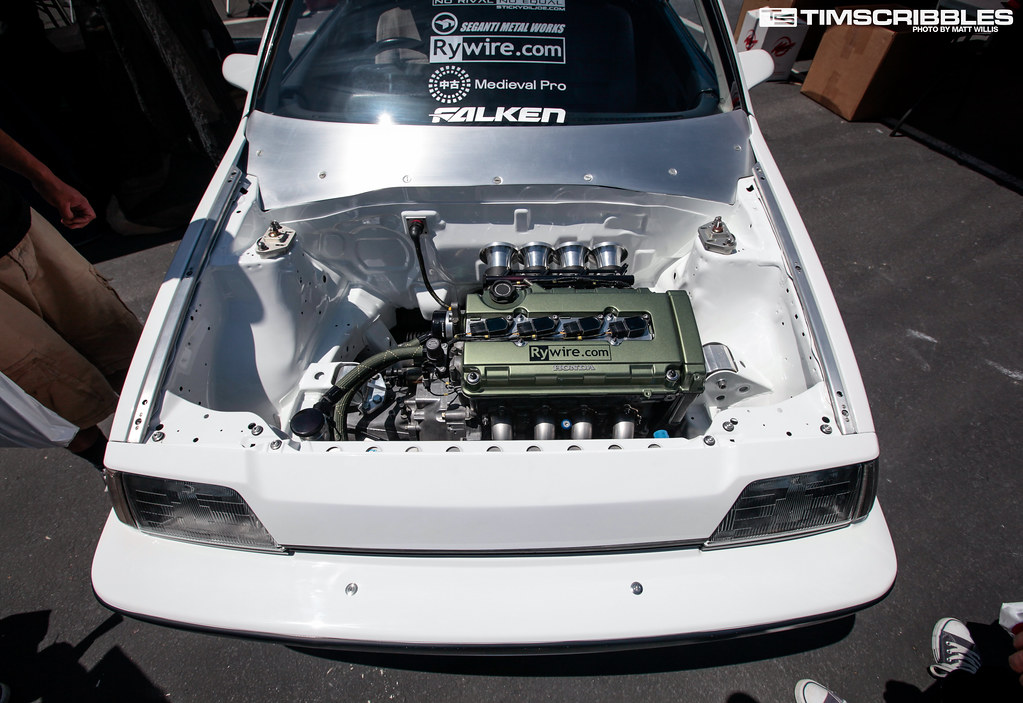
Ryan from RyWire is building another wicked Honda.. There is a shop helping him with the sheetmetal fabrication. Their work is impeccable!! Check out his build. Post comments on what you think!! Check all 12 pages of the build thread. Click here!

This is Ryans EA-T civic.. It is a running/driving car.. but how?? Nothing is hooked up to the firewall.. There arent any brakes.. Can you guys figure out how this is possible?


12-rotor engine.....


- This guy (Miura-san) makes all of the cool new high-end body kits in this small little shop in japan. Top Resin Art (TRA).
Click here to view the speedhunter's article (Remeber smoking cigarettes is bad!!)


- Unreal restoration shop. This is one of the places where the best in the business go.. Brabus
Click here to check the Speedhunters article.


- If you like art and cars.. seek no further. This Blown-Apart car art is mind blowing. Tons of work goes into it and the final products are very cool.
Click here for the speedhunters article.


- Tomcat S13 anyone??
Click this link to see what a Tomcat s13 is....


This builder's vision is super unique!! Check out the wild paint scheme on his s14:


Monday, February 10, 2014

Visited Wiring Specialties

This company in Connecticut focuses on selling pre-made engine wiring harnesses. They had some pretty wild cars in the shop. Check them out! www.wiringspecialties.com

Goodbye old friend!

Starlet is gone! Was a fun little car :)

Check out some of the things I've been reading!

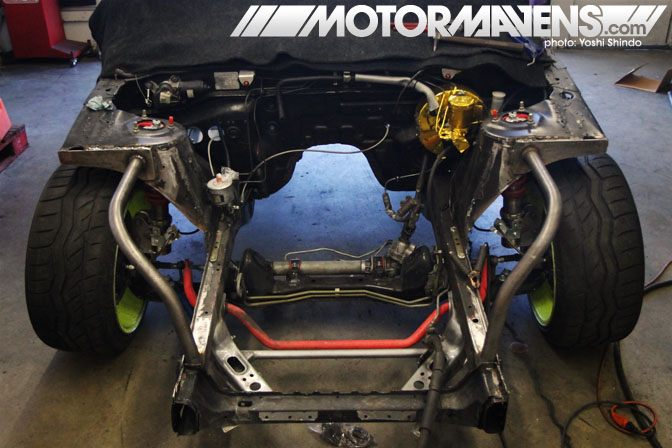
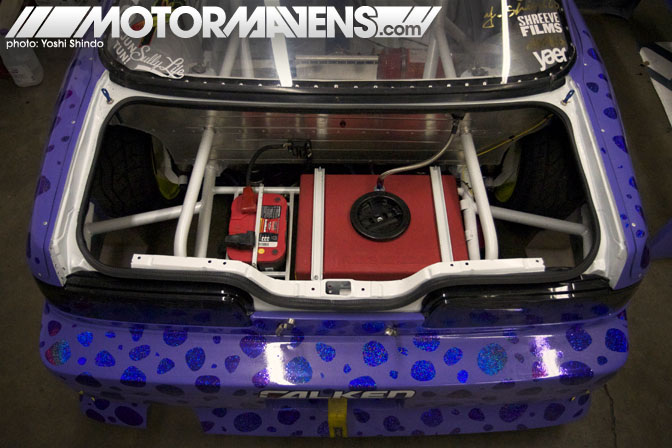
Check out this "carspotting" post made about Walker Wilkerson's S13 on MotorMavens website: Click Here

I like how the front and the rear are chopped down and made tubular (easy to fix if you hit a wall drifting)

CNC machine work

Remember the other day I was talking about CNC type machine work. It is basically a type of computer controlled for machines. Any machine that a human can operate can also be operated by a computer. Remember your practice using the plasma cutter.. Check this CNC plasma cutting machine for example:


How about something a little more complex? The CNC 5 axis machining center can make things from scratch and even modify existing engine components. Some start with a solid chunk of material, and some start with an existing component.


Everything must start with design: Check out this site that shows the type of work that can be done with a CNC. Check out these examples

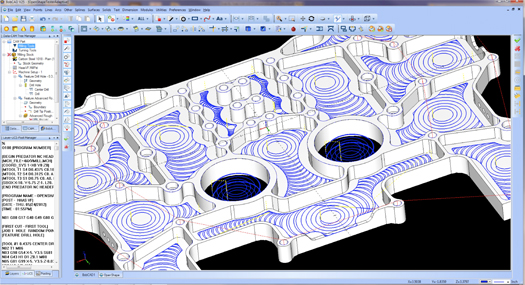
Programming the design in an accurate CAD drawing (computer aided design):

Sunday, February 2, 2014

Check Us Out Krusty's Fourm Post
Hopefully we did good tell us what you think thanks
-Krusty Team
240sx S13 Frame Rail Write up Repair

Friday, January 24, 2014

a little TRIVIA for you!

Automotive Trivia

"Flathead" or "L-head" car engines were common into the 1950s. The Ford flathead V8 is more famous than many of the car models it was installed in. What makes a flathead engine a flathead?

A. Above the pistons the cylinder head is machined completely flat rather than slightly domed. The combustion chamber is confined to the upper end of the cylinder.

B. The valve covers are made of cast iron which gives them a flat appearance compared to stamped metal valve covers. Sturdy cast iron (or alloy) is necessary because the rocker arm shafts are bolted to the valve cover rather than the cylinder head.

C. The exhaust and intake valves are located beside the piston in the engine block. The cylinder heads appear flat because they only contain combustion chamber space rather than all the valve train gear (rocker arms, valves, springs, valve covers, etc.) found on overhead valve (OHV) engine cylinder heads.


- RockAuto Monthly Newsletter

Thursday, January 23, 2014

Sometimes you just have to make it.

The snap-on adapter for our 18mm compression tester didn't have a valve core nor did it have threads to put one in (guess how we found that out). I had the snap-on rep send us a replacement, but this one didn't come with an 18mm adapter.... So I figured it was safe to assume more time would be wasted if I didn't take action.

I cut a valve stem off of an old wheel turned it down to .250" and then I drilled out the adapter to .251 and a little crazy glue.....

Having access to a lathe is invaluable.

Sunday, January 19, 2014

Finished cage

In this shot you can see the many tubes and where they tie into the front bottom of the half lateral and the footing.
 

In the picture below you can see were  the cage is sent forward to the firewall. This is taken from under the steering wheel.

In this picture you can see the rear stays that support the main hoop on the outer bends and the rear cross bars that support the center expanse of the main hoop. Both of these sets of bars terminate at plates footings on the tops of the rear shock (strut) towers.

This picture gives you a good idea of the relation of the cage and the drivers controls. It also shows the forward components that connect to the firewall.

Taken from the passenger foot well you can see the tubes that triangulate towards the firewall. These tubes will help to keep the front half of the car from bending up into the cage. On the other side of the firewall is the back of the shock tower. You can also see the footings for the front of the half laterals (that run along the driver and passenger window/door openings) and how they are joined by the sill bar, bottom of the door x-bar, and the bar that supports the top window bar.